
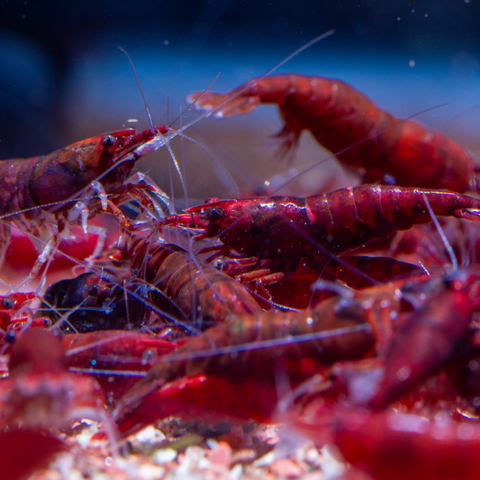
Red Cherry is almost every aquarium keeper's first shrimp. Red, undemanding, quick to breed and easy to see among green plants. It is one of the colour lines of the species Neocaridina davidi, often simply called the cherry shrimp.
Red Cherry, Red Fire, Bloody Mary: what is the difference
It is one line at different grades of selection. Red Cherry has a partly transparent body and uneven colour. Red Fire is coloured almost completely and is brighter. Bloody Mary is the darkest, ruby grade. The higher the grade, the more expensive the shrimp, but the care is the same.

What water they need
We recommend pH 7.2–7.5, general hardness GH 4–8 °dH, carbonate hardness KH 2–5 °dH and a temperature of 22–24 °C (tolerates 18–28 °C). Stability is what matters most: shrimp cope badly with sudden swings. You can see what comes out of your tap on our water check by city page.
Why the shrimp turns pale
The red colour depends on mood and conditions. A shrimp turns pale after a move, after moulting, on light substrate and under stress. Usually the colour returns within a few days. If the whole colony has stayed pale for a long time, check the water and the food. Red shrimp look brightest on dark substrate and among green plants.
Breeding
The female is larger than the male, with a rounded belly, and is often more brightly coloured. She carries the eggs under her tail for about a month, and then fully formed tiny shrimp hatch. For the young to survive, you need moss and a tank without fish that would eat them. Within a year, ten shrimp grow into a colony of several dozen.
What to feed
The base is a dedicated shrimp food, tablets or paste, plus blanched vegetables and dry leaves. Feed a little at a time: as much as they eat in 1–2 hours. Overfeeding is the main cause of problems.
Who to keep them with
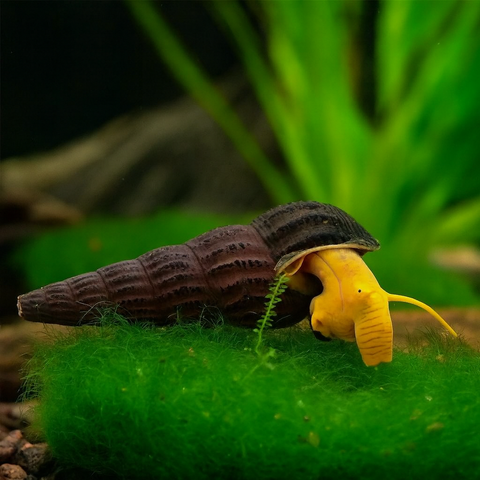
Best on their own, or with snails and the smallest peaceful fish. Don't mix Red Cherry with other Neocaridina colours: after a few generations the offspring turn brownish.
We advise starting with a group of at least 10 shrimp. We ship Red Fire in packs of 10–40; the shrimp are already used to Belgian tap water.

Comments (0)
There are no comments for this article. Be the first one to leave a message!